 Kurdistan News
Peace Process or Another Delay? The Kurdish Question Cannot Be Solved by Disarmament Alone
As Turkey moves forward with legislation linked to the PKK’s disarmament, a deeper question remains: what happens to the political and democratic rights of millions of Kurds?
For decades, successive Turkish governments have promised different forms of a “solution” to the Kurdish question. Previous initiatives raised hopes for peace, only to collapse without resolving the fundamental political, cultural and legal issues facing Kurds in Turkey.
Today, another process is underway.
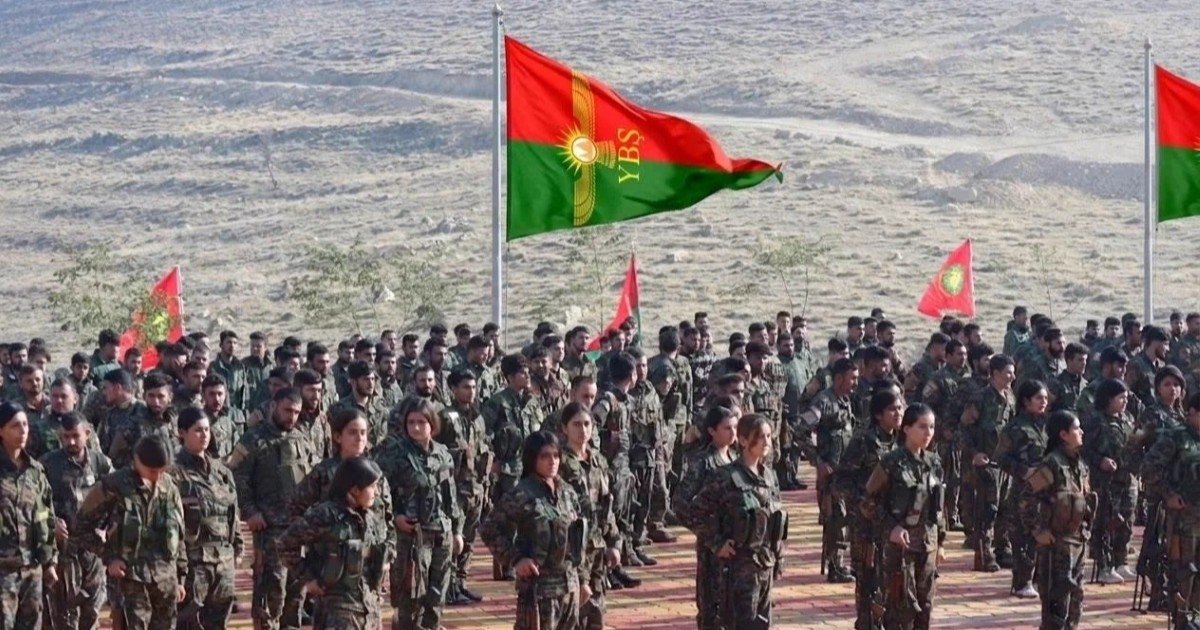
The PKK announced its decision to dissolve and end its armed struggle in 2025 following Abdullah Öcalan’s call for disarmament. In August 2026, the Turkish parliament passed legislation establishing a legal framework for disarmament and the reintegration of certain former PKK members. President Recep Tayyip Erdoğan subsequently signed the legislation into law. (Reuters)
These developments are significant.
But they also raise a fundamental question:
Is this truly a peace process, or is Turkey once again asking Kurds to wait while the underlying political question remains unresolved?
Disarmament is not the same as peace
A sustainable peace cannot be measured only by whether weapons are laid down.
Peace also requires political freedom, equal citizenship, freedom of expression, cultural rights, democratic representation and an independent judiciary.
Human Rights Watch’s assessment of Turkey’s 2026 human-rights situation argues that, despite the government’s pursuit of an end to the armed conflict, authorities had not taken sufficient steps to guarantee equal rights for Kurds, introduce meaningful anti-discrimination measures, reform abusive counterterrorism legislation or release political prisoners. (Human Rights Watch)
That contradiction is at the heart of the current debate.
If one side is expected to abandon armed struggle while Kurdish politicians, activists, journalists and elected representatives continue to face terrorism-related prosecutions for peaceful political activity, then the question of what exactly has changed remains unavoidable.
Arrests, terrorism charges and political repression
Human Rights Watch has documented the imprisonment and prosecution of hundreds of Kurdish activists, former parliamentarians, mayors and party officials on terrorism-related charges arising from legitimate non-violent political activities, speeches and social-media posts. It has also documented the removal of elected mayors, including politicians from the pro-Kurdish DEM Party. (Human Rights Watch)
Kurdish journalists have also faced terrorism-related prosecutions. Human Rights Watch reported that eight Kurdish journalists were convicted in one Ankara case, while another case involving 20 Kurdish journalists and media workers in Diyarbakır was continuing. (Human Rights Watch)
These cases matter because a peace process cannot be separated from the conditions in which Kurdish political participation takes place.
If peaceful political expression can continue to result in terrorism investigations or imprisonment, then disarmament alone cannot constitute a democratic solution.
What about allegations of torture and ill-treatment?
Reports of abuse by law-enforcement authorities have also remained a serious concern.
Amnesty International has documented allegations of torture and other ill-treatment in Turkey and called for independent and effective investigations into allegations of unlawful police violence. Its 2025 research into the March protests found patterns of unlawful use of force that, in some cases, may have amounted to torture or other ill-treatment. (Amnesty International)
These findings do not mean that every allegation is proven or that every police officer is responsible. But they demonstrate why effective investigation and accountability are essential components of any genuine peace process.
The Kurdish question is bigger than the PKK
Perhaps the most important issue is this:
The Kurdish question cannot be reduced to the existence of the PKK.
Millions of Kurdish citizens who have never been members or supporters of the organisation have political, cultural and linguistic demands of their own.
The right to participate freely in politics, the protection of elected representatives, freedom of expression, freedom of assembly and the ability to preserve and develop Kurdish language and culture are questions that exist independently of the PKK.
Ending an armed conflict is therefore only one part of the problem.
The larger challenge is creating a political system in which Kurdish citizens do not have to choose between silence and confrontation in order to have their identity and political demands recognised.
The danger of another cycle of disappointment
There is a reason many Kurds remain sceptical.
Previous peace efforts created expectations but ultimately failed. The fear today is that the same pattern could repeat itself: negotiations, promises, disarmament, political uncertainty — followed by a return to arrests, prosecutions and restrictions.
Reuters reported in May 2026 that the peace process had stalled amid disagreement over the sequencing of disarmament and democratic reforms, with Kurdish political figures arguing that legal guarantees and reforms were necessary for lasting progress. (Reuters)
That is precisely why the current process should not be judged only by what happens to the PKK.
It should be judged by what happens to Kurdish society as a whole.
A genuine peace must be measured by rights
If Turkey wants to convince Kurdish society that this is different from previous initiatives, the evidence must go beyond legislation concerning disarmament.
A credible peace process should produce measurable changes:
* Protection for peaceful political activity
* An end to the misuse of broad terrorism laws against non-violent political expression
* Respect for elected Kurdish representatives
* Stronger protections for freedom of expression and assembly
* Effective investigations into allegations of torture and ill-treatment
* Recognition and protection of Kurdish language and cultural rights
* Judicial independence and implementation of European Court of Human Rights judgments
* A transparent political framework for resolving the Kurdish question
Without these changes, it is reasonable for many Kurds to ask whether the process represents genuine political transformation — or simply another period in which Kurdish society is being asked to wait.
The question Turkey must answer
The real test of the peace process is not whether the guns become silent.
The real test is whether Kurdish citizens can speak, organise, vote, protest, publish, govern and express their identity without being treated as a security threat.
Disarmament can end an armed conflict.
Only democracy, equality and political rights can create lasting peace.
For Kurdish society, the question is therefore no longer simply:
“Will the conflict end?”
It is:
“What kind of peace will replace it?”
Send a message
Write a review
📰 More Kurdistan & UK Kurdish News