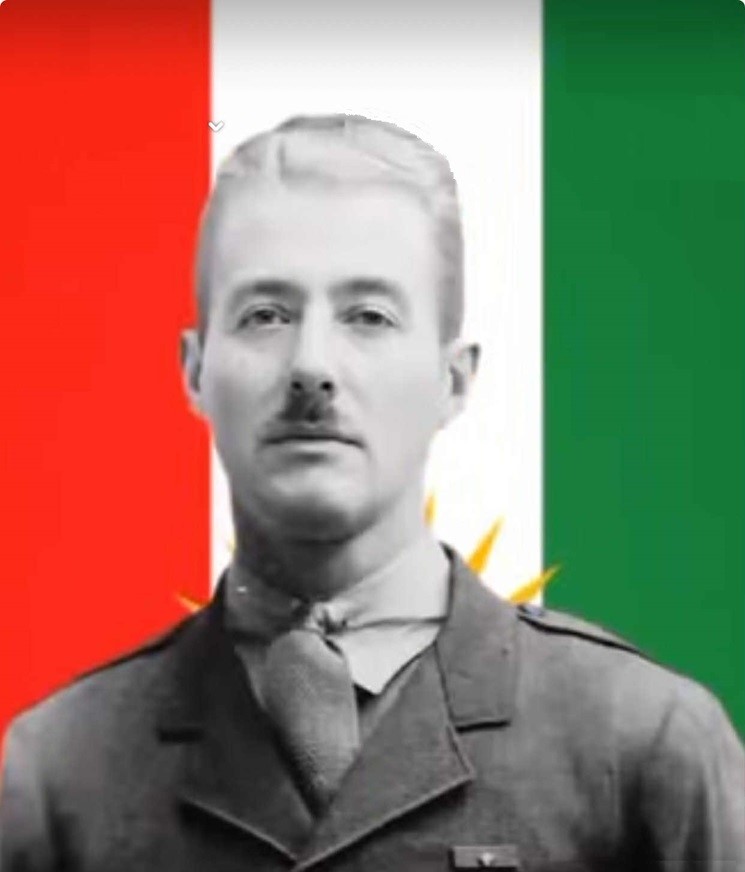
Ihsan Nuri Pasha
Ihsan Nuri Pasha was born in Bitlis and, as a trained Ottoman officer, became one of the few Kurdish leaders with professional military education. His career in the Ottoman and then Turkish armies gave him the strategic skills that would later make him a legend as the commander of the Kurdish armed struggle.
Devoted to the Kurdish cause after the collapse of the Ottoman Empire, Ihsan Nuri joined the exile movement Xoybun (Independence) and in 1927 was appointed commander of the Kurdish forces of the Ararat (Agirî) Republic - a self-declared Kurdish state centred on Mount Ararat. As its general and military commander, he led a determined resistance against the Turkish army for several years, earning the title 'Eagle of Ararat'.
Despite being outnumbered and ultimately forced back into Iran by a massive combined assault, Ihsan Nuri symbolised armed Kurdish resistance at its height and kept the struggle alive through his writings. He spent the rest of his long life in exile in Iran, recording the history of the Ararat rebellion and of the Kurdish cause he served until his death in 1976.