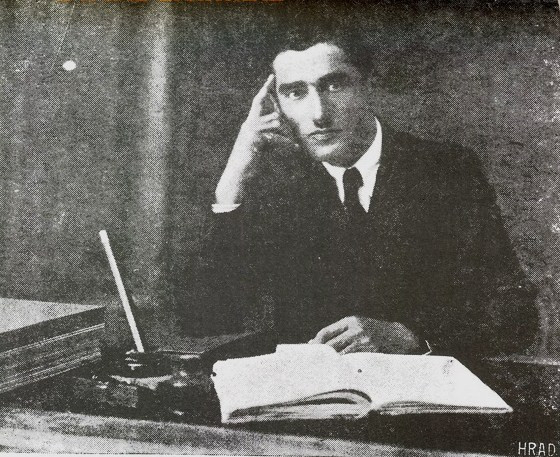
Nuri Dersimi
Nuri Dersimi, known to his people as Baytar (Veterinarian) Nuri, was born in Dersim and became one of the most important intellectuals, revolutionaries and chroniclers of the Kurdish national struggle. Trained as a veterinary surgeon in Istanbul, the army career that followed brought him into contact with both the Young Turk authorities and the rising tide of Kurdish nationalism.
He devoted himself to the Kurdish cause, becoming a key organiser of the 1921 Koçgiri uprising and later the Hêvî (Hope) and Kurdish Teali societies. In the 1930s he took a leading part in the great Dersim rebellion led by Seyid Riza, and was forced to flee into exile in Syria and then France, where he spent the rest of his life.
Dersimi's greatest and most lasting contribution was as the historian of Kurdish resistance. His landmark book, Kurdistan Tarihinde Dersim (Dersim in the History of Kurdistan), preserved a detailed, first-hand account of the Kurdish uprisings and their suppression - a crucial record that has informed generations of scholars and defenders of Kurdish memory and identity.